
Image
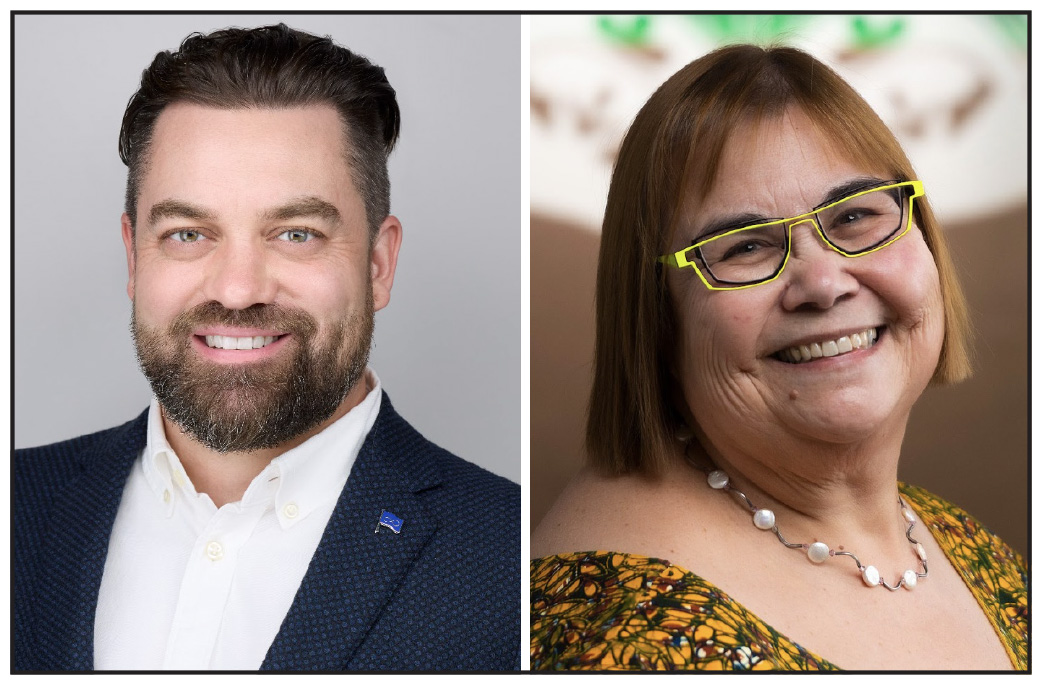
Image Caption
Local Journalism Initiative Reporter
Windspeaker.com
University of Alberta representatives are hoping their newest Massive Open Online Course (MOOC) on Indigenous issues is as successful as its previous one.
About 650,000 people took the “Indigenous Canada” course, which was first offered in 2017 and has been updated several times since.
Now the university’s Faculty of Native Studies has launched a new MOOC course titled “Indigenous Engagement and Partnership Development”.
The 12-module course, which takes about 12 hours to complete, teaches the fundamentals of how to properly collaborate with Indigenous Nations and organizations.
The course is free and open to all, regardless of any past experience engaging with Indigenous peoples or groups.
“The first modules are really about understanding the place that you live in, the people on whose territory you're working and how to understand a deep relationship to place,” said Adam Gaudry, the dean for the university’s Faculty of Native Studies. “We use Edmonton as an example, as that is where many of our instructional team members are based. But we encourage people to understand the historical relationships of their home area or the area in which they are working.”
Gaudry said modules then focus on developing core concepts in Indigenous partnership development. These concepts are drawn from Indigenous research methods and from people with practical experience working in Indigenous communities.
“The latter half focuses on skills development and application so that learners will have the skills and attitudes to ethically and effectively work with community,” Gaudry said. “We focus on having the right mix of confidence and humility that is needed in community settings.”
Gaudry believes one of the best things about this new course is the diversity of instruction. Each module features a new instructor. Besides professors, those who lead the sessions include Elders and community leaders.
“We also have a diversity of communities represented by our instructional team,” Gaudry said. “We really wanted to ensure that there were lots of different voices sharing their perspectives for the course because we didn't want a single voice or perspective to dominate. It really gives learners a chance to learn from knowledgeable people and choose what will work best in their particular context.”
Gaudry, a citizen of the Manitoba Métis Federation, is one of the instructors in the course.
Florence Glanfield, the university’s vice-provost of Indigenous Programming & Research, also teaches a module. She is a citizen of the Otipemisiwak Métis Government (Métis Nation of Alberta).
Instructors from Saskatchewan, Alberta, Nunavut and the Northwest Territories are also included.
Glanfield said she is blown away by how popular the university’s “Indigenous Canada” course became.
“It's a proud point for the University of Alberta,” she said. “I travel a lot across Canada in the work I do. And every single place I go there are people that come up and tell me how much they learned from that MOOC. Sometimes they're professors. Sometimes they're industry representatives. And there are organizations that promote the doing and engaging of that MOOC.”
Glanfield is confident the “Indigenous Engagement and Partnership Development” course will also be well received.
“Across every single industry in this place now called Canada, there are First Nations, Inuit and Métis communities that are asserting their voices and wanting to be involved in activities,” she said. “They don't want to be studied anymore. They don't want to just be taken for granted.
“This MOOC is going to be able to support understanding for all education and industry development activities.”
Gaudry believes the new MOOC greatly matters.
“We developed this course in response to the growing desire among researchers and others to work with Indigenous communities,” he said. “Over the past decade community engagement and community-based research have become quite commonplace, but with mixed results. We want to make sure that people going into Indigenous communities and organizations are prepared to be there, both in terms of a mindset of ‘community-first’ and a willingness to work alongside community members as good partners.”
Gaudry said he believes a lot of people are keen to do this type of work.
“But it's often challenging when you're first learning how to work collaboratively, especially when you come from an institutional or societal culture that rewards individual achievement,” he said. “We also wanted to support communities by creating a resource that their partners can use to prepare for collaborative work.”
Gaudry said he is conscious that Indigenous communities are receiving a tremendous number of requests for engagement or to partner on a variety of initiatives.
“We want this (course) to be something that can help people better understand what community-based collaboration really means and where they fit in that,” he said. “If communities find it helpful to refer potential partners to this course, that's great.”
Registration info for the “Indigenous Engagement and Partnership Development” course is available at https://www.ualberta.ca/en/admissions-programs/online-courses/indigenous-engagement-partnership-development/index.html
University of Alberta students can pay to take a longer version of the course for a credit.
“We taught the course last summer because we wanted to pilot it,” Glanfield said. “And we had really good feedback from students already. And we're thinking that we'll have really good feedback on this as well.”
Glanfield is encouraging companies across the country to have their staff take it.
“We have some research projects that are already asking for us to run this course for their research teams,” she added.