
Image
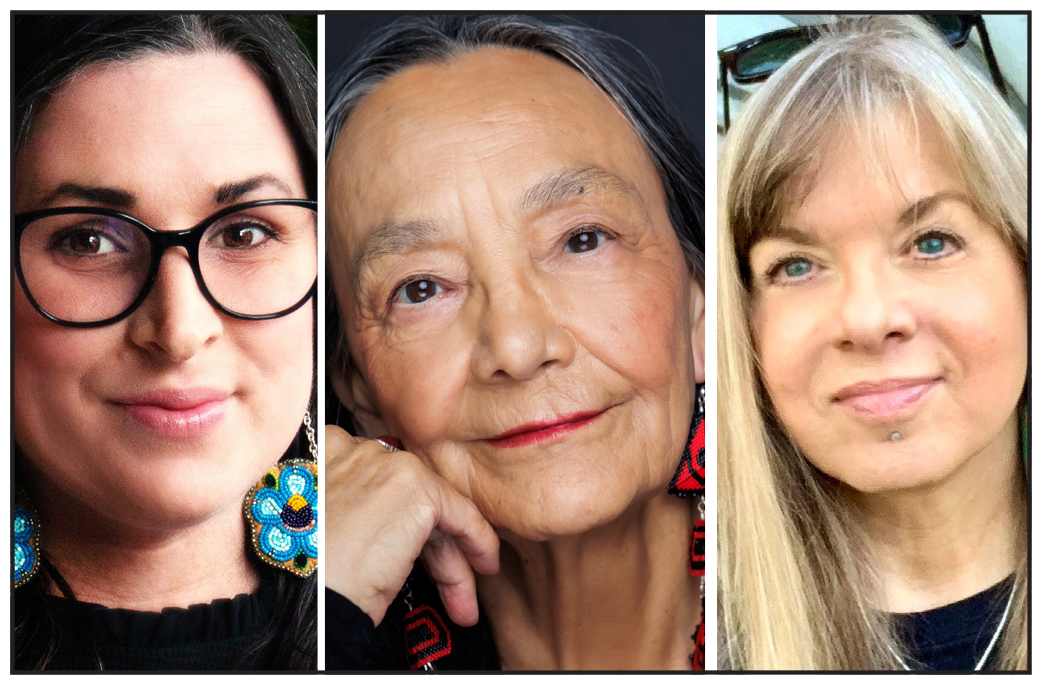
Image Caption
Local Journalism Initiative Reporter
Windspeaker.com
Ts’msyen filmmaker Pamela Post has turned a painful story from her father’s childhood into a journey of cultural reclamation. Haboolm Ksinaalgat (Soul Catcher), an Indigenous-owned animated short, is now seeking a place on the Oscar shortlist.
Co-directed with Michif/Red River Métis filmmaker Amanda Strong, Soul Catcher draws on an incident Post’s father Sunaats (John Arthur Post) described from his childhood along Skeena River in British Columbia when a missionary ordered children to throw a totem pole into the water.
Through handmade miniature forms and a supernatural journey, the film imagines recovering what was taken. Its telling connects three generations of Post’s family, with Indigenous creators deciding how the story would be made and shared.
Following its world premiere at the Toronto International Film Festival on Sept. 13, Soul Catcher won the Edmonton International Film Festival’s Grand Jury Award for best animated short, qualifying it for Oscar consideration.
The idea for the film took shape during the isolation of the COVID-19 lockdown in 2020, as Post found herself missing her parents and seeking comfort in the stories her father had shared about growing up along the river.
Her father, who was a member of the Gisbudwada (Killer Whale) clan from Kitsumkalum and who had passed on years earlier, had been closer in age to a grandfather when she was young. His recollections felt like travelling through time, connecting her to the people and places that shaped his life.
Those memories carried painful experiences, but they also held the warmth of the father she knew, a musician, singer and storyteller who retained a childlike spirit and made her childhood joyful.
Post wanted to create something that would honour her relationship with her father, celebrate her Ts’msyen culture and imagine offering comfort to her father as the little boy at the centre of one painful memory.
“My dad was really all about beauty and humour,” Post said.
A journalist and documentary filmmaker with family ties to Kitsumkalum, Post wanted to carry that warmth into a work that could hold painful memories alongside the beauty of Ts’msyen culture.
“This was always meant to be more like poetry, art and something of great beauty that also encapsulated some of the dark trauma that so many Indigenous people have in their lives and in the lives of their parents and grandparents,” Post said.
In his telling, her father was about eight when an evangelical missionary arrived to teach Sunday school in the village of Usk on the Skeena River.
“He told the children that the totem poles of their people were made by the devil, that they were the devil’s picture. He ordered them to drown a totem pole in the Skeena River, and so they were forced to do that,” Post said.
The memory remained with Sunaats into old age.
“I would love to bring that totem pole out of the Skeena River 100 years later,” Post said.
She created an ancient medicine woman, Gyilak’yoo (Robin), and her reluctant, gender-fluid apprentice, Lu’oo’ya (Echo). Gyilak’yoo passes ancestral knowledge to Lu’oo’ya as they undertake a supernatural mission to retrieve the pole’s lost soul.
The journey also enters a museum, extending its theme of recovery to sacred belongings held in collections around the world. Post describes such belongings as relatives, linking the mission to a broader effort to reclaim what was taken from First Nations communities.
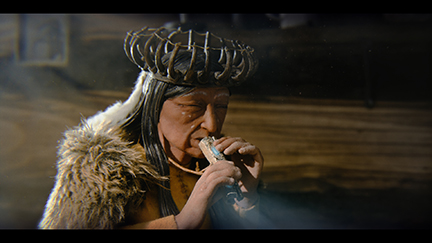
Gyilak’yoo is voiced by Cree/Métis actor Tantoo Cardinal, whose five-decade career includes Dances with Wolves and Killers of the Flower Moon. A member of the Order of Canada and recipient of a Governor General’s Performing Arts Award for Lifetime Artistic Achievement, Cardinal has been recognized for challenging stereotypes and bringing complex Indigenous characters to the screen.
The voice of Lu’oo’ya carries another family connection. Actor and singer Asher Wyatt Maclaren is Post’s son and the grandson of the man whose childhood inspired the film. His grandfather was already 80 when Maclaren was born, giving them little time together. Through the role, Maclaren helps bring his grandfather’s story to another generation.
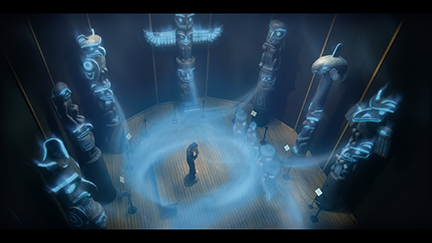
Stop-motion offered Post a way to move between those generations and between remembered experience and an imagined act of healing. She had loved the medium since childhood.
“I thought it lent itself perfectly to Indigenous storytelling. Its sculptural nature and movement just lend themselves to the supernatural,” Post said.
She approached Strong as a possible mentor while developing the script. Their conversations grew into a collaboration through Strong’s Vancouver-based studio, Spotted Fawn Productions.
Indigenous narrative sovereignty was central to their approach: Indigenous creators would decide how the story was produced and shared.
For Strong, that meant “the importance to own our stories,” including the production process and decisions about “how it goes out into the world.”
Financing the project through Spotted Fawn Productions was difficult, Strong said, but allowed her and Post to retain the rights to the story and film.
Indigenous artists guided the animation, art direction, music and post-production, supported by non-Indigenous collaborators. Ts’msyen artist Phil Gray led the work of translating Ts’msyen art into the miniatures required for stop-motion.
Cardinal saw Gyilak’yoo as a voice for ancestors and healers whose medicine and spiritual knowledge have helped sustain Indigenous communities through colonial harm. In guiding Lu’oo’ya, the character carries that knowledge forward.
“It was my great good fortune to voice the experience of our ancestor and the healer,” Cardinal said.
Having worked with Strong before, Cardinal was drawn to the filmmaker’s commitment to integrity and authenticity. Cardinal sees Indigenous stories as a foundation for young people navigating uncertainty and searching for connection.
“Young people really need some grounding with the winds that are blowing around in society right now. This is one of the soul catchers that we have breezing about,” Cardinal said.
The film’s healing journey also invites audiences to recognize the knowledge and spiritual connections Indigenous communities have carried through generations of colonial violence.
“Our audience had tears because it’s such a beautiful story. It reminds us of the hope, and it reminds us of how far we’ve come,” Cardinal said.
“My interest is in our people being recognized, respected, understood and valued by all of society,” she added.
Soul Catcher also received the Director’s Prize at SPARK Animation. Its filmmakers are now building an audience ahead of the Academy’s preliminary voting period, Dec. 7 to 11.
Fifteen animated shorts will advance to the shortlist announced Dec. 15, with five nominees to be announced Jan. 21, 2027. The 99th Academy Awards take place March 14, 2027.
Post said Indigenous audience members have told her the film encouraged them to consider telling their own family stories. Those responses have been deeply moving for a filmmaker whose starting point was the memory of her dad.
“It’s a love letter to my father. It’s a love letter to the Skeena River and to the Tsimshian people,” Post shared.
Watch the trailer for Haboolm Ksinaalgat (Soul Catcher) here: https://www.instagram.com/reel/Dfr9NbCNUp1/