
Image
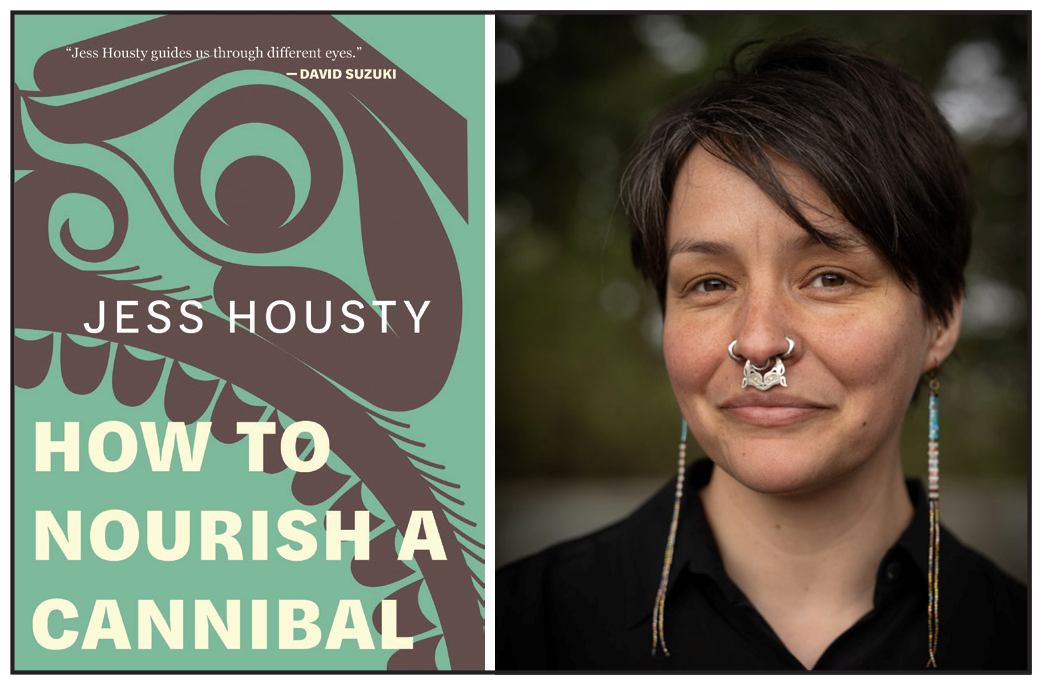
Image Caption
Windspeaker.com Books Feature Writer
Local Journalism Initiative Reporter
A cannibal in the Heiltsuk culture, says poet Jess Housty, is a “complex idea…as something that takes, but also something that gives. There's a really deep inherent reciprocity to the cannibal figure.”
It is this supernatural and spiritual aspect that Housty examines in their second poetry collection How to Nourish a Cannibal.
Growing up on the land in British Columbia and participating in the Heiltsuk culture and spirituality shaped the way Housty sees the world, which includes an affinity for the supernatural and the spiritual.
“The figure of the cannibal in our culture and in our stories…is not the caricature that it's often reduced to in Western literature of a human who eats people. It's been a conduit for something much bigger, and I'm really interested in the nuance and complexity of that figure in our oral culture and really wanted to explore that in my poems,” they said.
In the titular poem, which comes almost two-thirds of the way through the collection, Housty writes, “This is not about starvation;/you are a feast that replenishes itself./You are fed by feeding others.”
Housty says they didn’t want to lead with the poem because the “collection builds to it and through it.”
They also note that unlike their first collection of poetry, Crushed Wild Mint, which was written in a time of deep grief during their grandmother’s final years and while they were providing her with end-of-life care, How to Nourish a Cannibal “is much more about being present in my own body and the way that I experience the world around me.”
In the poems, Housty transitions between the use of first person (both singular and plural) and the rare second person or you.
It was an unconscious decision, they say.
“I’m autistic. There are times that I am writing as a way to process things that I am experiencing and sometimes that involves a sense of dissociation or distance from what I'm processing to give myself perspective on it and give myself space,” said Housty.
“Other times I feel very open and I think that if I were to map it out that the ways that I write probably correspond to my own sense of groundedness and whether I am trying to invite myself into an understanding through my processing or whether I understand the thing and I'm trying to invite others into it.”
How to Nourish a Cannibal is also very much a love letter to the land. Housty makes the connection between the human body and the land, between human grief and the land, between human joy and the land.
“Growing up in a culture that understands non-human kin as being a vital part of your family, including animals, including ancestors, including places and the land and the waters, those sensory experiences that I have on the land and my emotional experiences that I process on the land are really inextricably tied for me,” Housty said. “It all feels like a really beautiful thing that I don't even really try to untangle.”
Housty is also a herbalist and that work gives them a deeper appreciation and understanding of the reciprocity that comes from tending to the medicines.
“I am really grateful for those teachings. I'm grateful for the meditation that is in my life, in the act of going out and harvesting and processing and preparing medicines. I'm grateful for the joy and the abundance and fulfillment that comes from being able to be a part of people's healing. For me, that feels like a really big, important cycle and rhythm in my life,” they said.
In the poem “The Year We Lost You,” they write, “But the land remembers/and gave us all the medicines we needed.”
How to Nourish a Cannibal, released Sept. 15, is published by Nightwood Editions. It can be purchased at https://harbourpublishing.com/products/9780889715189?srsltid=AU7gw4WCeb…