
Image
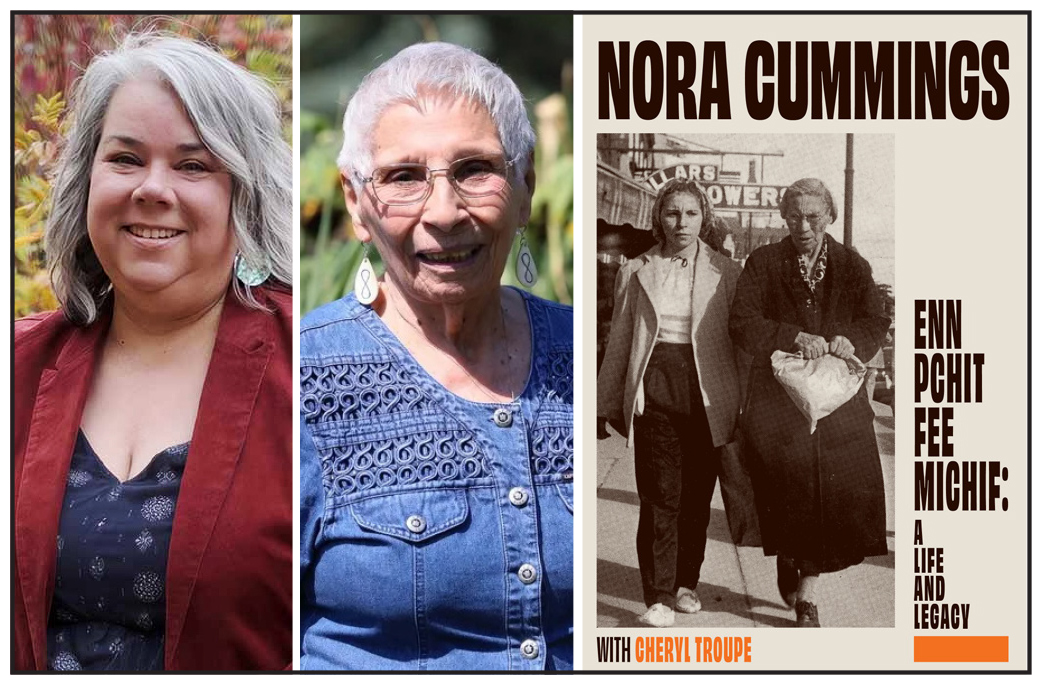
Image Caption
Windspeaker.com Books Feature Writer
Local Journalism Initiative Reporter
Trailblazer Nora Cummings has done extraordinary things despite being so shy she needed her husband to go to the store with her. So it was only natural that teaming up with Métis and prairie historian Cheryl Troupe to write Nora Cummings, Enn pchit fee Michif: A Life and Legacy would result in second thoughts.
“When I got it done, I was excited and then I sat down one night and I was talking with my daughter and said, ‘I wonder what my koohkoom (grandmother) would say of me doing this?’” said Cummings, a Michif from Saskatchewan.
What would her koohkoom say?
Cummings would need to translate the book from English to Michif so her grandmother could understand it, and then “I get a feeling she would say, ‘We won't get in trouble.’ Because that's the way when they moved into Saskatoon; the agents that would go into their homes and run their home and say, ‘Don't do this. You can't do that’.”
In Enn pchit fee Michif (pchit fee meaning “my girl” or “little girl”), Troupe places Cummings’ life in the broader context of the Métis in Saskatchewan.
“I was able to then work with her story to highlight and bring in some of those historical pieces so that we can contextualize just how significant her leadership was in this period,” Troupe explained.
Troupe took over from writer Cathy Littlejohn-King in telling Cummings’ story after Littlejohn-King became ill and couldn’t finish the project. Troupe has known Cummings for a long time and has heard her stories often.
Troupe points out that it isn’t often Métis women leaders are highlighted.
“We need to showcase that and uplift that and let people know that it's not just the men that were working really hard to build the (Métis) Nation, but women have worked, sometimes behind the scenes, sometimes in very direct leadership roles, to help support the Nation and build the Nation. And Nora is just an excellent example of that,” said Troupe. This memoir is a “collective legacy” for all women, she said.
Cummings was committed to social and political activism. She was a cofounder of the Saskatchewan Native Women’s Association and, still much to her dismay, served as president. She was active in what would become the Métis Nation-Saskatchewan. She ran for Saskatoon city council and became an advocate for Indigenous women.
Born in 1938, her family moved out of their house in Saskatoon and back to the road allowance on the east side of the South Saskatchewan River when she was one. It’s where she was raised. Cummings says in the book that the Michif families felt safe in the road allowance, away from the prying eyes of the government agents.
Cummings lays out in detail the strong knit community that was formed by the Métis in the road allowance and the pride they took in their small homes. She writes about the strength and direction she got from the matriarchs of her family.
She also recounts the splintering of the community when they were forced off the road allowance in 1953 and moved into the city of Saskatoon.
“I think it's important. We have to tell our stories. I mean, this is our city. This is where we lived. This is where I was born. And, you know, I just feel it's important that people should know the things that my old people went through in their time,” Cummings told Windspeaker.
Métis also built Saskatoon, she says proudly in her book.
Racism, including during Cummings’ time at the church-run St. Joseph’s School in Saskatoon, figured prominently, as did the hard work her parents carried out to support her family.
Cummings got involved in the Métis movement in 1970 because of her Second World War veteran uncle Clarence (C.J.) Trotchie. She was asked by Métis Society of Saskatchewan president Jim Sinclair and Métis activist Jim Durocher to take on the job as a fieldworker for the organization. She was the first woman to serve in that position.
“It took me a long time to get over my shyness, even though I was working with my own people. Today, people wouldn’t believe that I was that shy. But (the leaders) had confidence in me and believed I could do the job. And I did,” Cummings writes.
From there, her involvement grew and so did her accomplishments.
“She's a role model for so many of us,” said Troupe. “That's evident whenever you go somewhere with her. Everyone knows her. She's so highly respected. She's just influenced so many people, women in particular, but not just women. Her work with young people, even the work she did with old people in the Senate for the Métis Nation. She's just a leader in every respect and people respect her for her commitment.”
When Cummings began her work, she says it was “for our people. We have to make sure. This has to be done.”
And the work for her people continues in Enn pchit fee Michif. She notes that many young people no longer have grandparents they can turn to.
“I want it known not only for our families, but I want it to be known for my family, my children, my grandchildren, great-grandchildren, but not only them, our own people. There's a lot of our young people that are lost…and they all come to me and ask all kinds of questions,” she said.
Nora Cummings, Enn pchit fee Michif: A Life and Legacy is published by the University of Regina Press. It will be launched Oct. 22 at McNally-Robinson Booksellers in Saskatoon. It can be purchased at https://uofrpress.ca/Books/N/Nora-Cummings-Enn-pchit-fee-Michif