
Image
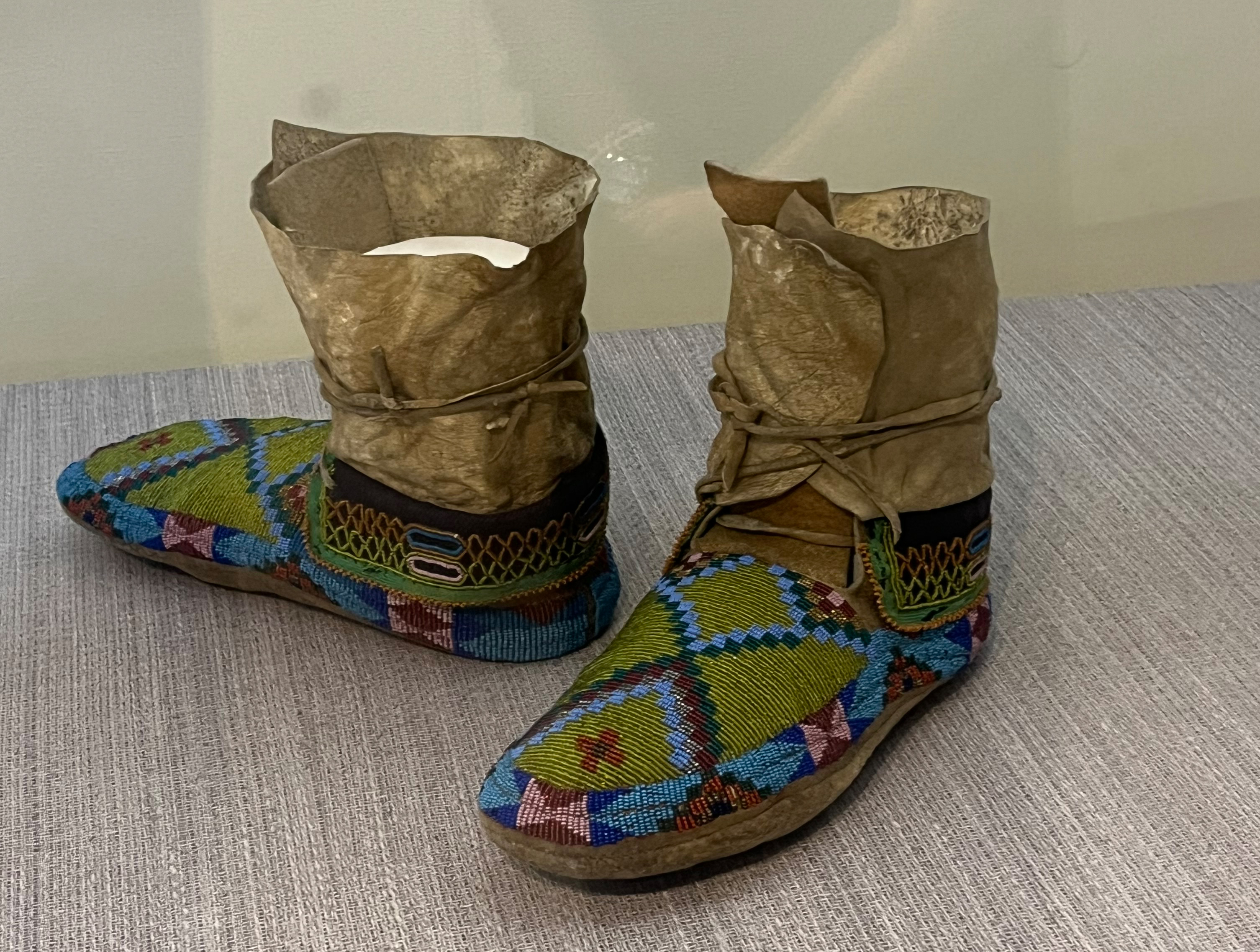
Image Caption
Local Journalism Initiative Reporter
Windspeaker.com
An exhibit at the Toronto’s Bata Shoe Museum titled Brilliant: The Art of Beaded Footwear Around the World includes about 85 pieces and about 25 of them are Indigenous items.
“A good percentage of the exhibition is showing and highlighting beadwork from within an Indigenous context,” said Justine Woods, a co-creator of the exhibit.
The exhibit opens to the public on Oct. 22 at 327 Bloor St W. It will have an 18-month run and continue until April 2028.
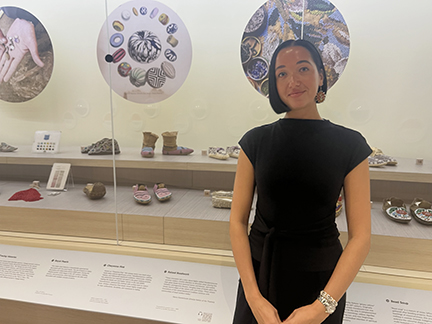
Woods, who is Métis, worked alongside two other co-curators—Elizabeth Semmelhack, the museum’s director and senior curator, and Nishi Bassi, the venue’s curator and manager of exhibitions.
“I’m grateful to have played a large role in the integration and incorporation of a series of Indigenous belongings in this exhibition,” Woods said. “And it’s really important to us when thinking about beadwork as a global practice, but also as a practice that is very central to Indigenous material knowledges to be able to explain and also be able to express the nuanced ways in which Indigenous communities have adapted and incorporated and used beadwork as a form of self-expression through clothing and adornment.”
The exhibition explores not only the cultural significance of beaded footwear, but also the artistry and labour of it across more than 400 years of history.
“We really wanted to highlight those different beadwork techniques, use of beadwork and also incorporation of beadwork as an aesthetic form of survivance and resilience in the show,” Woods said.
The Bata Shoe Museum’s possessions includes many of the Indigenous items featured.
“All of the Indigenous belongings that are on display in the show, except for a few commissioned-based pieces by contemporary artists, were already part of the Bata Shoe Museum collection,” she said. “They have been cared for by the museum since they came into the collection.
“I would say the majority of them have not been on display in an exhibition format in this way for a very long time, if ever.”
Woods said representatives from a half-dozen Indigenous communities were consulted to ensure museum officials were displaying items in a way that was genuine.
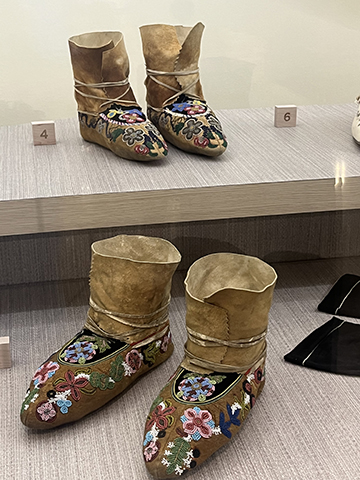
Among the items are two pairs of pointed-toe, wraparound moccasins made by artist Elaine Alexie, a member of Teetł’it Gwich’in First Nation in the Northwest Territories.
These moccasins are also called fancy shoes.
“These pairs specifically were made for special occasions,” Woods said. “So, that’s why they are part of the case called “Beaded Occasions” where we’re really highlighting meaningful moments and ceremonies and celebrations in which beaded footwork is being worn.”
Woods said Alexie’s moccasins have intricate floral beadwork, which is particular to Gwich’in communities.
Other Indigenous items on display feature a technique called Bead Soup, where remnants of other beads from other beadwork projects are kept together and cared for over time. These leftover pieces result in a multi-colored blend of beads that are then stitched in a way that honours the multiplicity of colour.
“This kind of concept of Bead Soup is very fun,” Woods said. “But it also has a lot of deep meaning and intention around the ways in which we care for beads and how we pass beads along intergenerationally through familial contexts.”
Otter track motif moccasins are the oldest example of Indigenous iconography. This pattern consists of small diamond shapes and then an elongated diamond and then back to small diamond shapes.
“This technique is actually inspired by otter tracks in the snow,” Woods said. “When you look at otter tracks in the snow, you’ll see that they take a few steps and they actually slide on their belly. And then they take a few more steps and they slide on their belly.”
The exhibit also features pieces from the museum’s international collection with items from Europe, Africa and Asia.
“Beadwork is extraordinary because it transforms something as small and seemingly simple as a bead into a powerful means of expression,” Semmelhack said. “Across cultures and centuries, people have used their skill, time and imagination to create intricately beaded footwear to communicate identity, status, belonging and beauty.”
Semmelhack said the exhibit “celebrates the remarkable artistry of these works while also inviting visitors to look closely at the hands, histories and cultural traditions behind their creation.”
More information on the exhibit and the museum is available at https://batashoemuseum.ca/