
Image
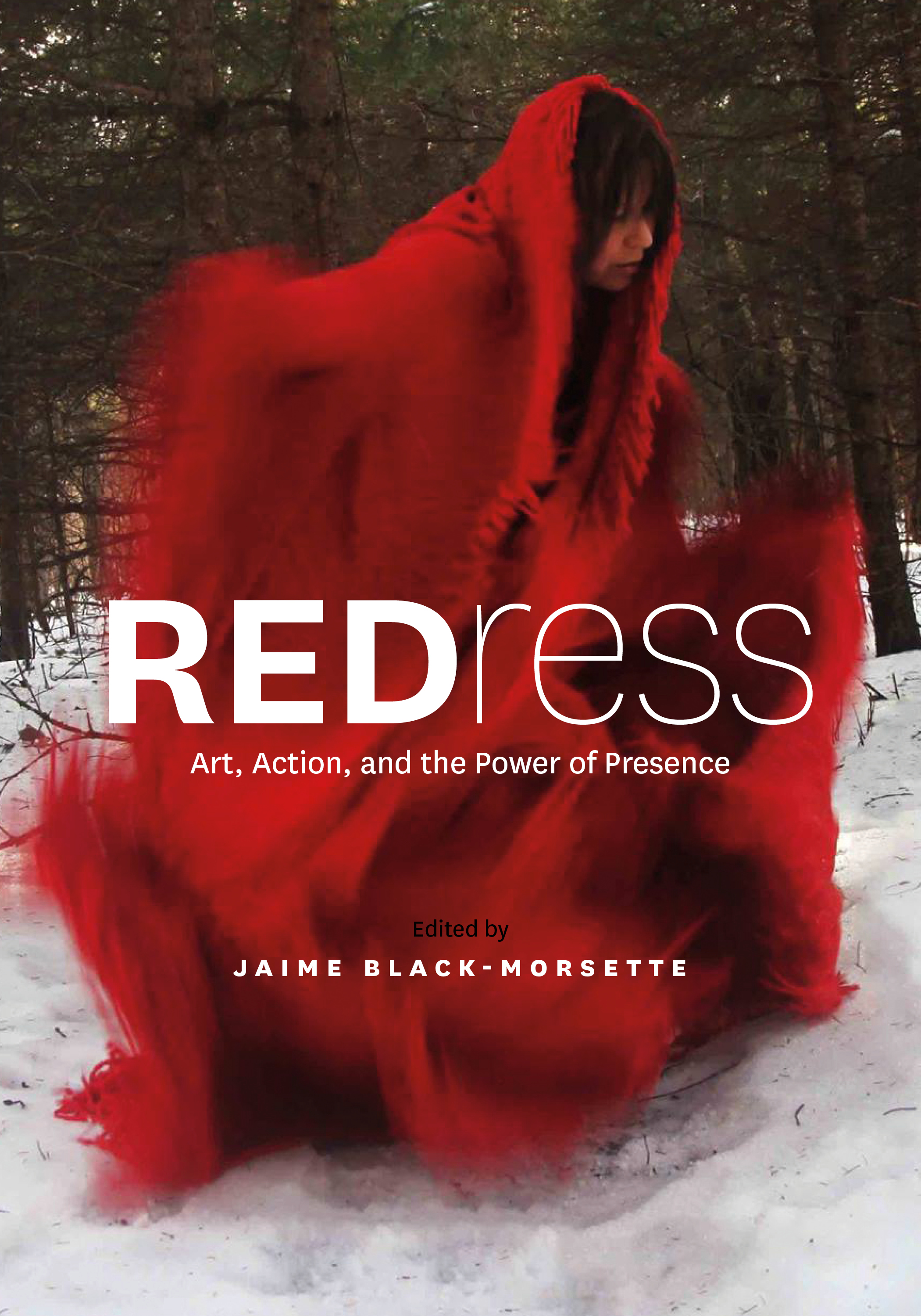
Image Caption
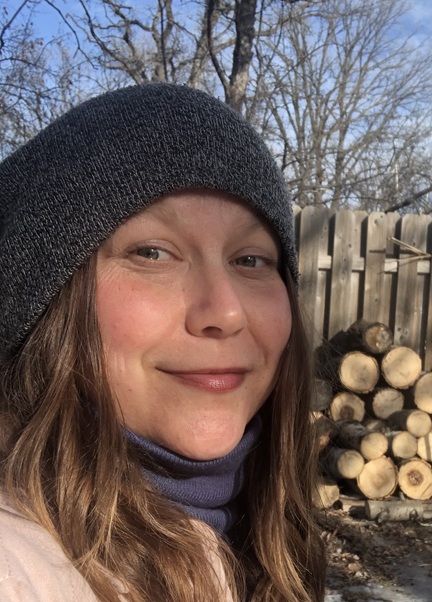
Windspeaker.com Books Feature Writer
Local Journalism Initiative Reporter
REDress: Art, Action, and the Power of Presence is not a book with a beginning and an end, says Red River Métis author, artist and activist Jaime Black-Morsette.
“I tried to subvert the concept of the book and make it a circle by calling the last chapter ‘Beginning Again’. And I'm really looking into the ways in which we have the philosophy of the circle and the cycle, and rebirth and death, and of coming back and rising up again,” said Black-Morsette.
The final chapter includes Black-Morsette’s poems “Skywoman” and “Skywoman 1” about the beginning of the world.
“I'm really thinking about, and posing to readers, the concept of what seeds are we planting, what new worlds are we building...and imagining what those look like,” she said.
“Generally we're working towards a more unified or more just and a more caring world that really values human life, animal life, plant life, all of it. And everything going back to balance in the way that it was for many thousands of years before we got to the place we are today.”
REDress, the movement that would give voice to and become the universal symbol for missing and murdered Indigenous women and girls and two-spirited people (MMIWG2S), was a concept created by Black-Morsette.
As she explains in the book, she attended a 2009 conference in Germany where she listened to First Nations University of Canada professor Jo-Ann Episkenew talk about the numbers of missing or murdered Indigenous women in Canada. After witnessing the women working together to call out the violence in Bogotá, Columbia she began imagining red dresses.
It was something she took back with her to her home city of Winnipeg.
“I think I was probably picking up on that energy of just living in this city and doing the work that I was doing and being around the circles I was around and being on the ground and seeing what's happening. There's so much violence happening here in this city and feeling through that and watching my own family and the history of women in general and all of that. And the red dress just became…almost like this magnet…or like this voice for all of that,” she said. It wasn’t something she had anticipated.
She came up with the installation title REDress because “it just really encompasses what the work is about.” It’s a play on the word “redress” meaning to right a wrong.
Black-Morsette won’t commit to what syllable is supposed to be stressed when saying the installation’s title.
“I like interpretation,” she said. “I think it's nice to say it both ways. I think I say ‘Red dress’ probably more often just because people recognize it maybe better.”
Close to 20 artists and curators, who have given voice to the violence against Indigenous women and girls and two-spirit individuals, contributed their insights to REDress: Art, Action, and the Power of Presence.
“I reached out to people who really had influenced me in the work that I've done and that I had connection with and who also were deeply connected to what's going on on the ground,” said Black-Morsette.
“The concept of women who are doing work in community and making change in community and also women who are studying and looking into the sort of broader framework of what Indigenous women are facing and why they're facing violence. I wanted…those kinds of different perspectives and ways of looking at the issue.”
In the foreword, the late Cathy Merrick, who at the time of her death was grand chief of the Assembly of Manitoba Chiefs and battling the government to search for Indigenous women whose remains were thought to be in a landfill, wrote that MMIWG2S was not “an unexpected, non-routine event… The devastating loss of Indigenous life is not an isolated or sudden curiosity, but a pervasive, deliberate, and systemic issue buried in the foundation of this country.”
Merrick recognized the “power of women” who were seeking systemic changes not only because of personal loss but in a need to “protect future generations.”
Installations and exhibits, the power of grassroots activism, the names of the lost, and the national inquiry into MMIWG2S are recounted in REDress.
In “Heart Work,” Jaimie Isaac, Winnipeg-based Anishinaabe artist and curator, wrote about numerous multi-media installations that address the violence.
“Art itself doesn’t create change, the people do. Art promotes awareness in various forms and actions, but it’s the people challenging systems of oppression, creating collective actions of building awareness and making political changes and policies that are Indigenously self-determined,” wrote Isaac.
Black-Morsette’s first REDress installation was in 2010. Since then she has created more than 100 large scale installations.
In 2023, red dresses were displayed at Camp Morgan, set up by Cambria Harris at the Prairie Green land fill north of Winnipeg when it was determined the bodies of her mother Morgan Harris and Marcedes Myran were likely there. The Manitoba Conservative government refused to search the landfill.
In “Red Dresses and Moccasin Vamps,” interdisciplinary scholar Sherry Farrell Racette (Métis/Algonquin/Irish) wrote, “The red dresses of Search The Landfill illustrate the ways a symbol can give voice and courage, and, ideally, mobilize political action toward the change we seek.”
Cambria Harris contributed two powerful poems to the book. In “Bring Me Home”, she gives voice to her mother: “The landfill is our home/While we lay alone/Waiting for them to find us…/for now I lay within/Until the government decides/To find her and I…/No landfill is a grave…/I am not a story/I was and am loved…/Bring me home.”
“It's heartbreaking in a lot of ways…to think that we're still doing this work," Black-Morsette told Windspeaker.com. "Camp Morgan really was a very visceral reminder of how little has really been done and how not only does the tragedy continue, but the complete lack of care about the tragedy is ongoing as well.
“When you won't search for remains, it's obvious that there's very little care and support coming from the systems that are meant to care and support us,” she said.
The landfill search became a provincial election issue that saw the Conservative government fall to the Wab Kinew-led New Democratic Party. Kinew, a member of the Ojibways of Onigaming First Nation, went ahead with the search of the landfill in late 2024. Shortly after, Harris and Myran’s remains were found.
Black-Morsette is hopeful that REDress: Art, Action, and the Power of Presence can help bring about change.
“But what is change? Is change changing someone's mind, like one person's mind one day. Is change making a young person feel seen? There's so many ways that change can happen and they're all valid and valuable ways. It's important to remember that too,” she said.
REDress: Art, Action, and the Power of Presence was published by HighWater Press in 2025. It is available at https://www.portageandmainpress.com/Books/R/REDress